

Every Muslim trader asks this question at some point. You want to grow your money. You want to trade. You also want to make sure your halal trading choices actually align with what Islam allows.
This article breaks it down clearly. No fatwa. No complicated fiqh debates. Just a plain explanation of each type of trading, what makes it halal, and what makes it haram.
One thing to keep in mind before we go further. Islam does not ban trade. Allah says in Surah Al-Baqarah (2:275), “Allah has permitted trade and forbidden riba.” The Prophet Muhammad (peace be upon him) himself was a trader before prophethood. The issue is never trade itself. The issue is how you trade and what elements are involved.
In every Islamic matter, there is a fine line between halal and haram. Just as the method of slaughtering an animal determines if the meat is halal (through proper prayer and technique), the structure of a trade determines its status. Three things make any trade haram in Islam:
- Riba (interest or usury on money)
- Gharar (excessive uncertainty or ambiguity in a contract)
- Maisir (gambling or pure speculation with no underlying value)
Keep these three in mind as you read each section below. They are the filter for everything.
What Is Spot Trading and Is It Halal?
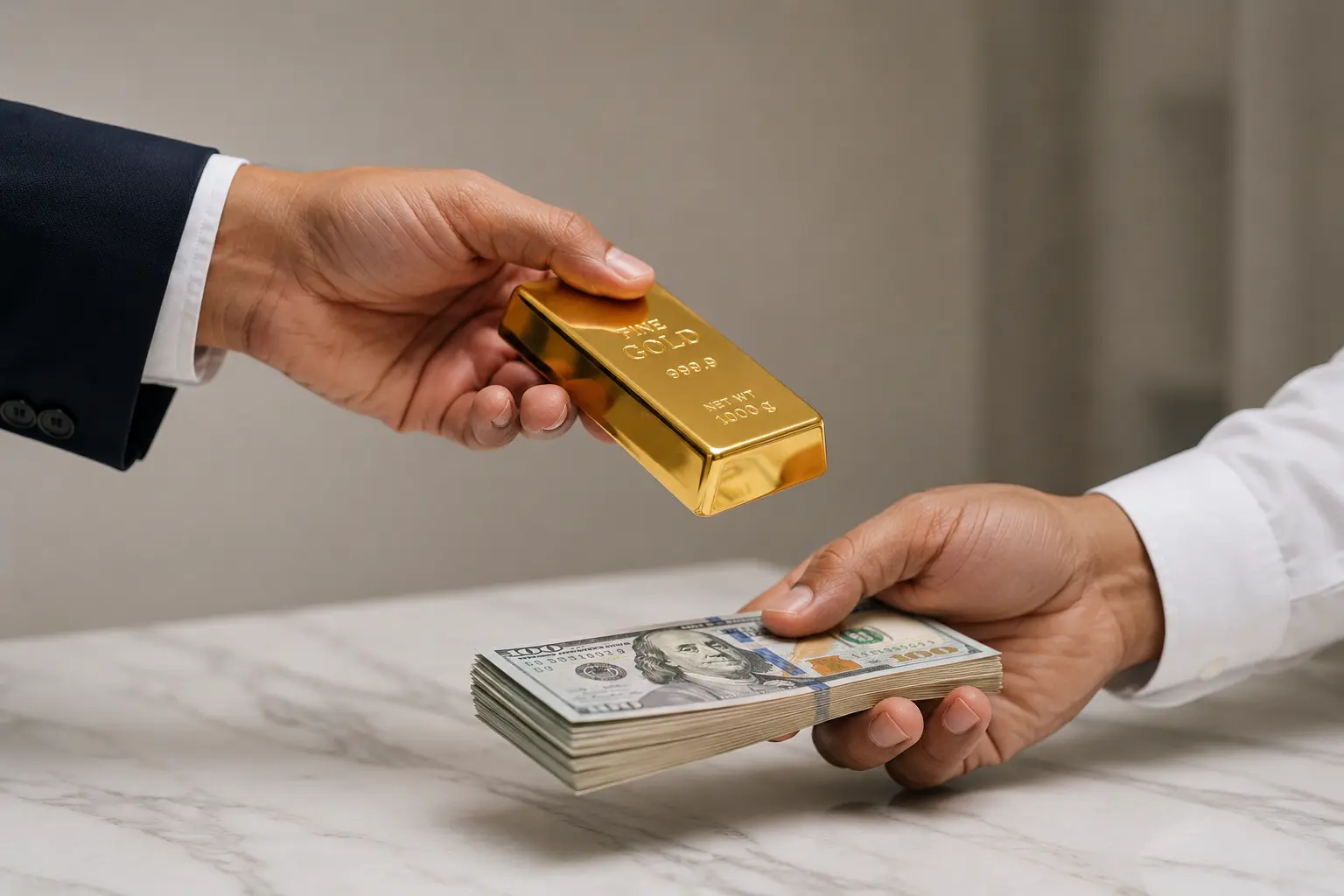
Spot trading means you buy something right now at the current price and you own it immediately.
Think of it like going to a gold shop. You pay 1 lakh rupees. You get gold. You walk out owning that gold. The price was fixed at that exact moment. No delays. No guessing about future rates.
Online, it works the same way. Say you have to pay someone 10 lakh rupees. You do not always hand over physical cash. Sometimes you transfer it to their bank. The value is identical. The ownership transfers. That is exactly what happens in online spot trading. You open a trade on Gold vs USD, and your account reflects the “status” or value of that gold at today’s price. Just as transferring money via a bank app transfers the value without physical cash, online spot trading transfers the ownership of the asset’s value. You own the position.
In spot forex trading, currencies are exchanged instantly without interest. That is why scholars generally consider this halal when the right conditions are met. For a full walkthrough of how forex trading works in Pakistan, visit our free Urdu forex training course.
What About Leverage in Spot Trading?
Leverage means a broker lends you extra capital so you can control a bigger position. Here is a real example. You go to a wholesale market to stock your shop. You pay 5 lakh in cash. The shopkeeper says, “You are a regular customer. Take another 2 lakh worth of stock from my side. Pay me back next month.” That is leverage. It exists in everyday life and it is not automatically haram.
This is where it gets specific:
- If your broker gives you leverage with no interest, no swap fee, and no hidden charge, it is generally permissible. Many brokers offer Islamic trading accounts that remove overnight swap fees to stay compliant with the prohibition of riba. You can explore broker options through our forex partners page to find ones offering Islamic accounts in Pakistan.
- If the broker charges you interest on that borrowed amount overnight, it becomes haram. That is riba, plain and simple.
In 2024, nearly 63% of brokers offering Islamic accounts supported intraday trading with real-time settlement and no interest. Halal trading through spot is a recognized and growing practice globally.
Bottom line on spot trading: Halal, as long as you use a swap-free Islamic account and avoid interest-bearing leverage.
What Is Futures Trading and Is It Halal?
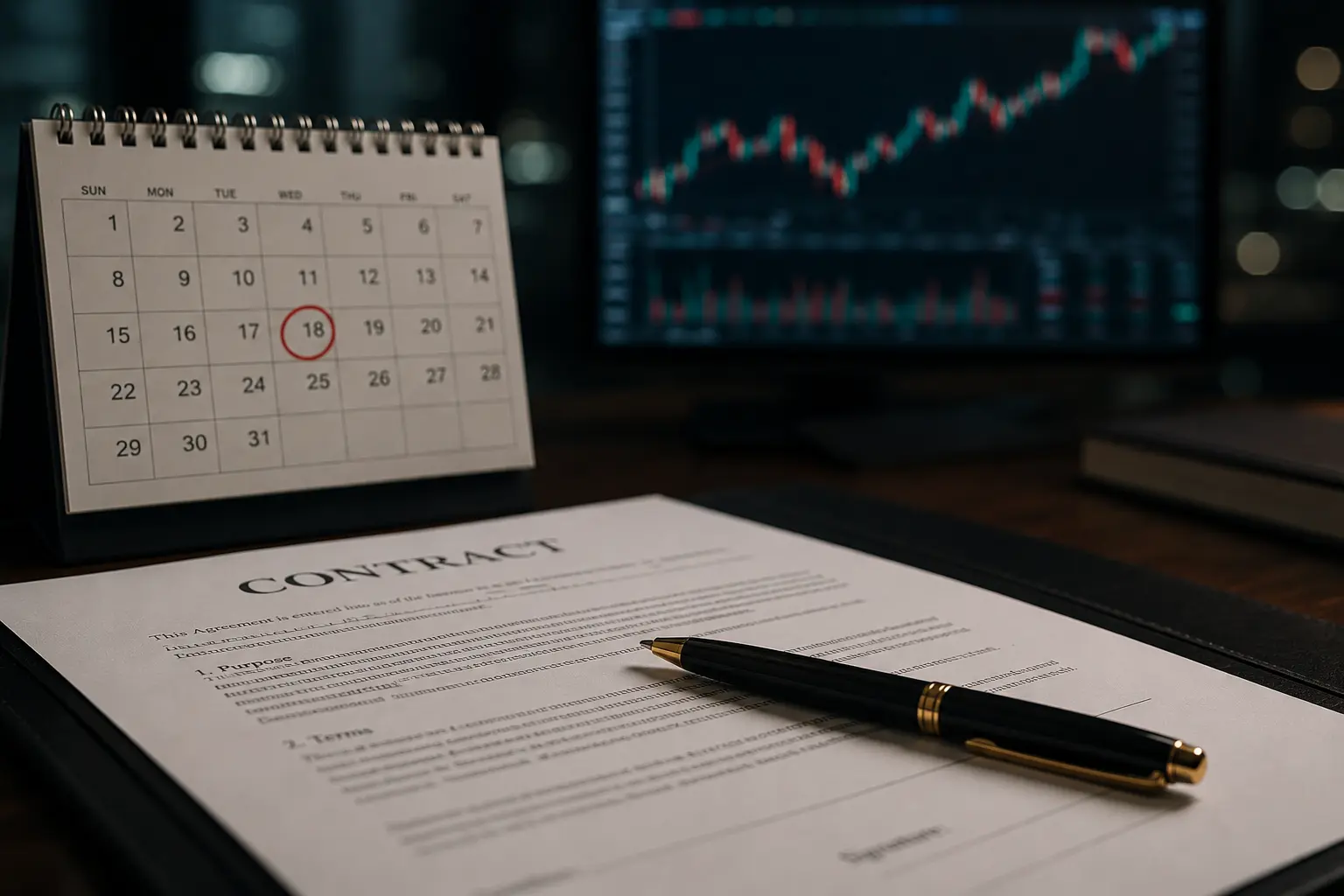
Futures trading means you agree today to buy or sell something at a specific price, with the actual exchange happening weeks or months later.
Say you agree to buy 500 grams of gold in 3 months at $4,500. Whether gold goes to $5,500 or drops to $3,500, you are locked in at $4,500. The other party is also locked in. Neither of you can change the price now.
This sounds like a smart hedge. From an Islamic view, it creates serious problems because **you cannot sell what you do not possess.**
What Does the Hadith Say About This?
In Arab times, people used to sell their crops before they were ready. Someone would plant wheat in January, and before it even grew, they would sell it at a fixed price for May. The Prophet (SAW) prohibited this practice, as recorded clearly in Bukhari and Muslim.
The hadith goes further with a specific example. For date palms, you cannot sell the dates until the fruit is clearly ready. Not until the color changes from green to yellow or brown. Not until there is actual sweetness in the fruit. Until that point, the sale is not allowed.
The reason is clear. Before that stage, nobody knows what the harvest will look like. The price locked today may be very different from the actual outcome. That uncertainty (Gharar) creates extreme gain on one side and extreme loss on the other. That leads to disputes. That is why it is prohibited. Futures trading today carries the same problem. You do not own the asset yet, and the market can move wildly. As a result, most Islamic scholars classify futures as haram due to deferred exchange and high gharar.
Bottom line on futures trading: Haram according to the majority of Islamic scholars.
What Is Options Trading and Is It Halal?
Options give you the right to buy or sell an asset at a set price before a deadline. Unlike futures, you are not forced to complete the deal. You can walk away. You just lose your token money.
Here is a simple example. You find a plot worth 50 lakh. You think you can resell it for 60 lakh. So you pay the owner 2 lakh as a token (bayana) and get 3 months to find a buyer. If a buyer comes, you proceed. If not, you walk away and lose that 2 lakh. The owner keeps it. The deal is cancelled.
This concept of bayana is actually present in classical Islamic trade. That is why some scholars view options as similar to an accepted old practice.
So Why Do Many Scholars Still Call It Haram?
The issue is intent (niyat). Consider this example. You want to buy a laptop for 5 lakh. You give the seller 1,000 rupees as a token and say you will pay the rest tomorrow. The next day your plan changes. Ethically, in Islam, the seller should return your 1,000 rupees, wish you well, and sell elsewhere. That is the Islamic ideal.
In market practice though, that bayana is usually kept. And in online options trading, most people are not even trying to own the asset. They are purely betting on price direction to profit from the premium. That intent changes the entire nature of the contract. As a result, most Islamic scholars consider retail options trading to be haram because the investor does not intend to hold the underlying asset.
Bottom line on options trading: Heavily debated. If used for genuine hedging with real intent to own the asset, some scholars allow it. In most retail use cases, it leans toward haram. Ask a qualified scholar for your specific situation.
What Is Binary Trading and Is It Halal?
Binary trading is not really trading at all. Here is the clearest way to explain it.
Imagine betting on whether your phone battery will stay on or turn off in the next minute. You and another person both put 1,000 rupees on the table. If you are right, you win their 1,000; if you are wrong, they win yours. That is binary trading in its simplest form. The phone, its value, its brand—none of it matters. The only thing that matters is one outcome in one time window.
Online, it works the same way. A 5-second candle is forming on a gold chart. You guess the next candle will be bullish. You put in $100. If you are right, you get back $180 to $190. If you are wrong, your full $100 is gone. You own nothing. You hold nothing. You just guessed and placed a bet.
This is the definition of **Maysir (Gambling)**. Binary trading is banned in most of Europe and many other countries because regulators recognize it is designed to drain users. Many people in Pakistan are doing it, but that does not make it allowed. Halal trading always requires real asset ownership. Binary has none. If you are new to trading and looking for where to start correctly, our advance forex trading concepts course covers the right foundations.
Bottom line on binary trading: Completely haram. Stay away from it.
A Quick Comparison of All Four Types
| Type | Own the Asset? | Interest Possible? | Gharar Level | Islamic Status |
|---|---|---|---|---|
| Spot Trading | Yes | Only if swap charged | Low | Halal (swap-free account) |
| Futures Trading | Not until later | Possible | High | Haram |
| Options Trading | Optional | Possible | Medium to High | Debated, mostly haram in retail |
| Binary Trading | Never | No | Extreme | Haram (Gambling) |
Three Questions to Ask Before You Open Any Trade
Before you place any trade, run it through these three questions:
- Do I actually own the asset or have a clear right to it?
- Is there any interest or swap fee charged on my position?
- Am I making a decision based on analysis or just guessing on direction?
If the answer to question 1 is no, stop. If the answer to question 2 is yes, switch to an Islamic account. If the answer to question 3 is “I am just guessing,” step back and build your knowledge first. For answers to common questions Pakistani traders have, check our frequently asked questions about forex.
Practical Advice for Halal Trading in Pakistan
A few things matter more than which type you pick:
Use a swap-free Islamic account. Many reputable brokers offer these. Demand for Islamic trading accounts grew by 38% year-over-year in Southeast Asia and the Middle East in 2024. This is a real, recognized structure, not a workaround. To see trusted brokers with Pakistan offices, visit our forex partners in Pakistan page.
Trade with your own money. Taking a loan to fund your account adds riba and emotional pressure. Both will damage your trading. If you are already in debt, trading is not for you. Fix your financial situation first.
Have another income source first. If your household depends on your trading account, you will make desperate decisions. You need to be able to run your life for 6 months to 1 year without touching your trading account. If that is not possible yet, do not start trading.
Give yourself real time to learn. Becoming a consistent trader takes a minimum of 1 to 1.5 years of focused, disciplined learning. Anyone who tells you otherwise is trying to sell you something. Start with the right foundation through our free forex training course in Urdu.
Final Word
Halal trading is possible. Islam has a long history of encouraging honest commerce. The Quran supports it. The Prophet (SAW) practiced it. What makes a trade haram is the structure around it: interest, gambling, uncertainty, and lack of real ownership. Spot trading with a proper Islamic account is the clearest halal path for online traders. Futures and binary trading fall outside what most scholars permit. Options sit in a grey area that requires careful intent and usually a scholar’s guidance.
Know what you are trading. Know how your account is structured. And if you are unsure, ask someone who knows Islamic finance, not just someone who wants to sell you a course.
Disclaimer: This article is for educational purposes only. It is not a fatwa or a religious ruling. For specific guidance on your trading setup, consult a qualified Islamic scholar.